Vintage Floral Digital Papers: Timeless Texture for Modern Design Projects
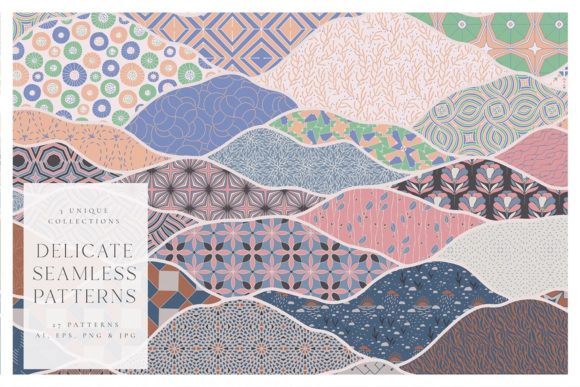
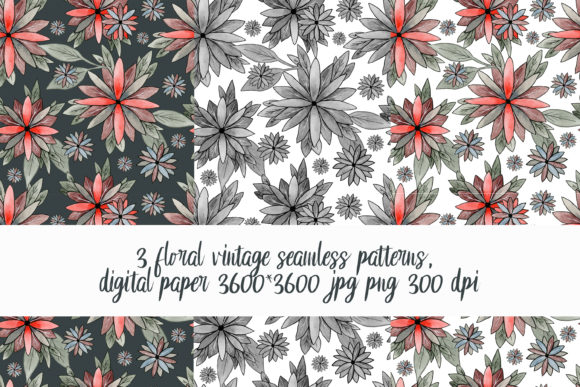
There’s something quietly powerful about a well-crafted vintage aesthetic—soft edges, delicate botanical motifs, and that unmistakable warmth of bygone eras. When translated into digital form, these qualities become incredibly versatile tools. The 3 Floral Vintage Seamless Patterns collection—and its companion set, the 3 Vintage plant flowers seamless patterns—delivers exactly that: authentic, high-fidelity texture you can drop into any creative workflow without losing resolution or charm.
What Makes These Patterns Stand Out?
First, let’s clarify what “seamless” really means in practice. It’s not just marketing jargon—it’s functionality. Each pattern repeats flawlessly edge-to-edge, with no visible joins or misalignments. That means whether you’re tiling across a 24-inch wedding invitation or scaling up to cover an entire website background, the continuity holds. No awkward seams. No pixelated stretching. Just clean, consistent repetition.
These aren’t scanned textures or low-res scans of old wallpaper. They’re digitally composed at 3600 × 3600 pixels, delivered in both JPG and PNG formats, and rendered at 300 dpi. That resolution ensures crisp output for print projects—think greeting cards, stationery suites, fabric mockups, or packaging labels—while the PNG option gives you transparency for layered web graphics, social media banners, or digital scrapbooking.
Two Complementary Sets, One Cohesive Vision
The collection is thoughtfully split into two distinct but harmonizing groups:
- 3 Floral Vintage Seamless Patterns: Think romantic, ornate, and gently nostalgic—think trailing roses, faded peonies, and delicate sprigs of lavender arranged in soft, balanced compositions. These lean into classic Victorian and Edwardian sensibilities, with subtle tonal variations and gentle grain overlays that mimic aged paper or textile dye.
- 3 Vintage plant flowers seamless patterns: Slightly more botanical and grounded—featuring illustrated ferns, eucalyptus clusters, and stylized succulents with muted greens, ochres, and dusty pinks. These feel like pages torn from a 1920s horticultural journal: precise yet organic, detailed but never clinical.
Together, they offer range without contradiction. You might use one floral pattern as a background for a boutique’s business card, then layer a plant-based pattern as a subtle border or watermark. Or combine them in a mood board for a home renovation project where softness and natural texture are central to the client’s vision.
Why Resolution and Format Matter More Than You Think
It’s easy to assume “high-res” is just for printing—but it affects flexibility at every stage. A 3600 × 3600 file gives you breathing room. Crop it tightly for a social media post thumbnail? Still sharp. Zoom in 200% to isolate a single bloom for a logo detail? No loss of fidelity. Convert to vector later? Much cleaner tracing when the source isn’t blurry or compressed.
The dual-format delivery (JPG + PNG) also reflects real-world usage. JPGs load faster on websites and work reliably in email templates. PNGs preserve transparency—essential if you’re designing over photos, creating animated overlays, or building layered Canva templates for clients. Neither requires special software to open; they’re universally compatible with Photoshop, Illustrator, Affinity Suite, Figma, Procreate, and even basic editors like Preview or Paint.NET.
Where These Patterns Shine in Real Projects
You don’t need to be a professional designer to benefit. These files serve creators across disciplines:
- Small business owners use them to brand product labels, Etsy shop banners, or printable planners—adding instant personality without hiring a designer.
- Wedding planners and stationers build cohesive suites: save-the-dates with a floral pattern as a watercolor wash, then switch to a plant motif for the menu card’s border.
- Teachers and homeschoolers incorporate them into worksheets, flashcards, or classroom posters—softening educational visuals while reinforcing thematic units (botany, history, art appreciation).
- Digital scrapbookers and bullet journal enthusiasts layer them under handwritten notes or photo collages for depth and tactile warmth.
One unexpected but frequent use? Web design mockups. Designers drop these patterns behind UI elements to test how typography reads against textured backgrounds—or use them as subtle hover states for buttons and cards. Because they’re seamless and high-res, they scale beautifully on retina displays and responsive layouts.
What’s Not Included—And Why That’s Intentional
This is a digital download only. No physical items will be shipped. You’ll receive the six pattern files (three floral, three plant-based), plus a simple license summary. That’s it.
Layouts you may see in preview images—like styled invitations, notebook covers, or fabric swatches—are demonstrations only. They show how the patterns behave in context, not what you’ll get in your ZIP file. This keeps pricing fair, delivery instant, and focus where it belongs: on the assets themselves.
If you’re used to template-heavy bundles, this might feel refreshingly minimal. There’s no learning curve tied to layered PSDs or complex instructions. Just open, drag, repeat—and start designing.
Practical Tips Before You Download
Before adding to cart, consider how you’ll use them:
- Check your software’s native support: Most modern apps handle 3600px files effortlessly, but if you’re on older hardware or using lightweight mobile editors, verify maximum supported dimensions.
- Think about color mode: These are RGB files—ideal for screen use and most print services that accept RGB. If you’re sending to a traditional offset printer, you may want to convert to CMYK yourself (though many labs now handle conversion automatically).
- Test scaling early: Drop one pattern into your project at 50% size first. Adjust opacity or blend mode (try “Multiply” over light photos or “Overlay” on neutral backgrounds) to see how it interacts before committing to full coverage.
- Layer intentionally: Don’t default to full-coverage backgrounds. Try clipping a floral pattern to a text shape, or using a plant motif as a subtle diagonal stripe behind a testimonial block.
And remember—you’re not locked in. Because these are digital files, you can experiment freely. Duplicate layers, adjust hue/saturation, invert colors, or mask sections. Their versatility multiplies with your creativity—not your budget.
A Note on Authenticity and Use
These aren’t AI-generated approximations. Each of the 3 Floral Vintage Seamless Patterns was hand-composed using archival references, period-appropriate color palettes, and deliberate imperfections—slight variation in line weight, soft halftone grain, intentional fading at the edges—to avoid that sterile, “too-perfect” look. They honor vintage aesthetics without mimicking them slavishly.
They’re also licensed for commercial use. Sell products featuring these patterns—stickers, mugs, digital planners, fabric prints—as long as you’re not reselling the files themselves or claiming authorship. That freedom matters, especially for makers building sustainable side-hustles or micro-brands.
If anything feels unclear—whether it’s licensing scope, compatibility with your specific tool, or how to adapt a pattern for a unique surface (like curved packaging or embroidery digitizing)—reach out directly. Quick, human support beats generic FAQs any day.