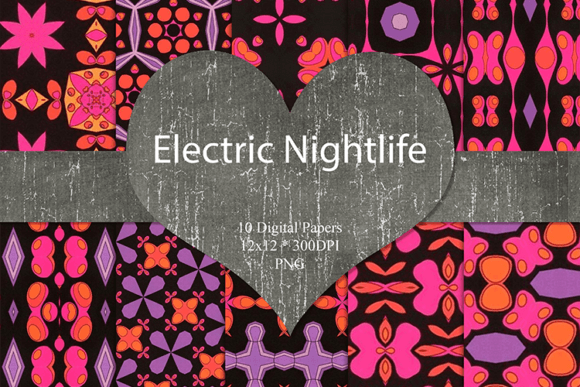
Neon Pink Purple Geometric Patterns: A Practical Guide for Crafters and Digital Designers
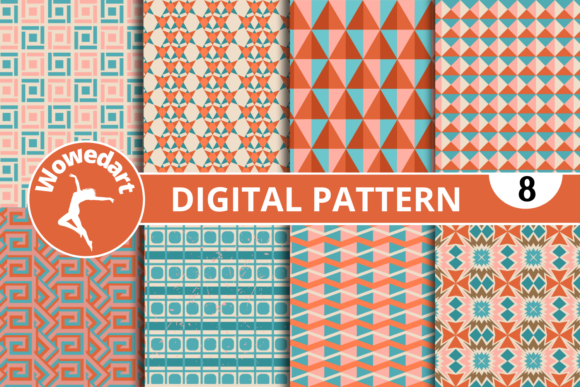
Neon Pink Purple Geometric Patterns refer to a curated set of digital design assets—specifically, 12 x 12 inch PNG files rendered at 300 DPI—that combine high-visibility neon pink and vivid purple hues with precise geometric layouts. These aren’t generic gradients or abstract textures; they’re intentionally structured repeats—think tessellated hexagons, interlocking triangles, asymmetric grids, and layered concentric shapes—all optimized for clarity, scalability, and print fidelity. What sets them apart is their dual emphasis on visual energy and technical reliability: the neon saturation delivers bold contrast without bleeding in print, while the geometric precision ensures clean edges during die-cutting or layering in mixed media projects.
How Neon Pink Purple Geometric Patterns Fit Into Broader Design Ecosystems
Digital paper collections exist across a wide spectrum—from watercolor washes and vintage textures to minimalist monochrome repeats and hand-drawn doodle patterns. Neon Pink Purple Geometric Patterns occupy a distinct niche: they bridge the gap between contemporary graphic design sensibility and hands-on craft utility. Unlike softer pastel-based digital papers (e.g., lavender linen or blush marble), these patterns prioritize sharpness, rhythm, and chromatic intensity. Compared to organic or grunge-style repeats, they offer greater predictability when tiling across large surfaces or scaling down for small die-cuts. And unlike low-resolution JPEGs or compressed web graphics, the 300 DPI PNG format preserves crisp vector-like edges—even when resized within design software like Adobe Photoshop, Affinity Designer, or Cricut Design Space.
Key Technical Advantages of the 12 x 12 Inch, 300 DPI PNG Format
- Print-ready consistency: At 12 x 12 inches and 300 DPI, each file matches standard scrapbook and cardstock sheet dimensions—eliminating guesswork when printing full sheets or preparing for commercial printing services.
- Transparency support: As PNGs, these files retain alpha channels, enabling seamless layering over photos, text, or other backgrounds without white halos or edge artifacts.
- Scalability without degradation: While not vector-based, the high resolution allows moderate resizing (e.g., reducing to 6 x 6 inches for journal covers or enlarging slightly for wall art) without visible pixelation.
- Software compatibility: Works natively in both raster (Photoshop, GIMP) and hybrid vector-raster tools (Cricut Design Space, Silhouette Studio, Canva Pro), supporting everything from digital collage to physical cutting workflows.
Real-World Use Cases—and Where Limitations Emerge
Neon Pink Purple Geometric Patterns shine in contexts where vibrancy, structure, and reproducibility matter. For card makers, they serve as dynamic background layers behind sentiment stamps or foil accents—adding depth without competing visually. In art journaling, the strong geometry provides an anchoring framework for expressive mark-making; you might paint over sections selectively, letting the pattern peek through as intentional negative space. Junk journalers use them as signature “signature pages” or tab dividers—especially effective when printed on textured cardstock, where the contrast between matte surface and neon ink creates subtle tactile interest.
Mixed media artists find value in the predictability of repeat alignment: when collaging multiple elements onto a single base, knowing that a triangle motif will line up precisely across adjacent sheets reduces trial-and-error during composition. Similarly, users of die-cutting machines benefit from the absence of soft edges or noise—clean lines translate directly into precise cuts, whether creating custom envelope liners or layered stencils.
That said, Neon Pink Purple Geometric Patterns aren’t universally ideal. Their intensity makes them less suited for projects requiring subtlety—such as wedding stationery with delicate script fonts or minimalist branding collateral. They also assume a certain level of color confidence: pairing neon pink and purple successfully often depends on surrounding palette choices (e.g., charcoal gray or stark white grounds work well; warm beiges or yellows may clash unless carefully balanced). If your workflow relies heavily on color adjustment—like recoloring patterns to match brand guidelines—the fixed RGB values mean you’ll need to edit manually rather than rely on built-in hue sliders.
Comparing Approaches: When to Choose Neon Pink Purple Geometric Patterns Over Alternatives
Consider Neon Pink Purple Geometric Patterns if your priority is immediate visual impact paired with technical reliability. They’re especially efficient when you’re working under time constraints—no need to build complex layer masks or adjust contrast curves just to get a usable background. That efficiency comes with tradeoffs, though. For example, if you frequently adapt patterns to specific Pantone references or require CMYK-optimized files for offset printing, these RGB PNGs will need conversion—and some vibrancy may shift in the process.
Compare this with hand-drawn geometric patterns: those offer unique character and irregularity but lack the uniformity needed for multi-sheet projects. Or consider SVG-based geometric repeats: infinitely scalable and editable, yet less accessible for beginners unfamiliar with vector manipulation or unsupported in some craft-specific platforms. Neon Pink Purple Geometric Patterns sit in the middle—more consistent than hand-drawn, more plug-and-play than SVG, and more print-accurate than low-res web graphics.
Practical Decision Factors
- Project scale: Are you producing one-of-a-kind pieces or batch-printing dozens of cards? Neon Pink Purple Geometric Patterns excel in repetition-heavy workflows due to their seamless tiling.
- Output method: Printing at home on an inkjet? These files hold up well. Sending to a professional lab? Confirm their RGB handling—some labs apply automatic color correction that dulls neon tones.
- Design flexibility needs: Do you regularly recolor, distort, or blend patterns? These are static assets—you’ll need image editing skills to modify them beyond basic opacity or layer blending modes.
- Aesthetic alignment: Does your project benefit from modern, energetic, youth-oriented, or festival-inspired vibes? Neon Pink Purple Geometric Patterns reinforce that tone. For heritage, botanical, or rustic themes, alternatives like muted plaid or pressed-flower scans may integrate more naturally.
Integrating Neon Pink Purple Geometric Patterns Thoughtfully
Even strong design assets can overwhelm if applied without intention. One effective strategy is using them as secondary elements—not dominant backgrounds, but as borders, corner accents, or cut-out overlays. Try printing a section at 50% opacity behind handwritten journal entries, or cutting narrow strips to frame photo mats. Another approach is selective masking: place the pattern on a layer above a photo, then use a layer mask to reveal only the geometric shapes where they intersect with key compositional lines (e.g., along a horizon or subject’s shoulder).
For educators or workshop leaders, these patterns also serve as excellent teaching tools—demonstrating concepts like symmetry, rhythm, and color theory in tangible ways. Students can analyze how spacing, scale, and hue interact within a fixed grid, then experiment with cropping or rotating to create new variations.
In summary, Neon Pink Purple Geometric Patterns represent a focused, technically sound option within the broader landscape of digital crafting resources. They reward users who value clarity, consistency, and chromatic boldness—and who understand how to balance intensity with restraint. They won’t replace every other pattern type in your library, but when the project calls for unmistakable energy and structural confidence, they deliver reliably. Whether you’re assembling a themed junk journal, prepping files for a Cricut project, or building layered digital collages, their combination of size, resolution, color, and geometry offers a distinctive, functional advantage—provided your goals align with their strengths.