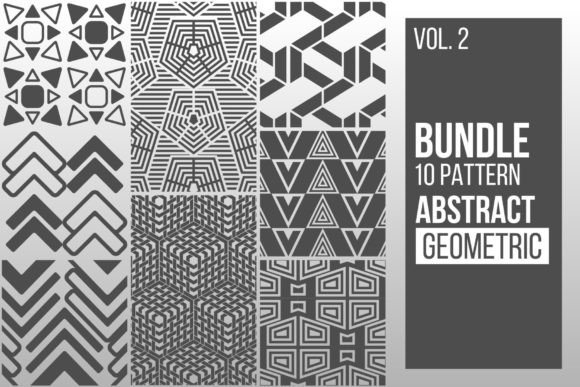
Ten Seamless Geometric Patterns Vol. 2: A Practical Resource for Design Integration and Visual Consistency
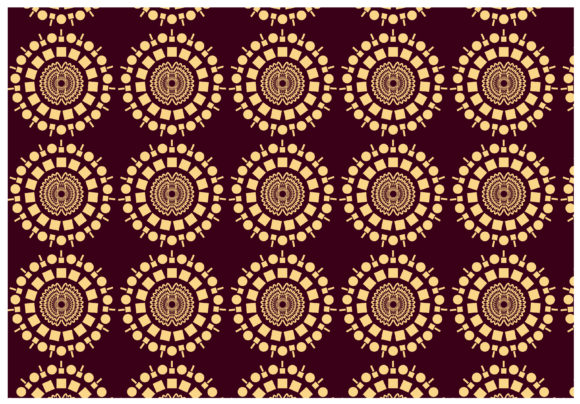
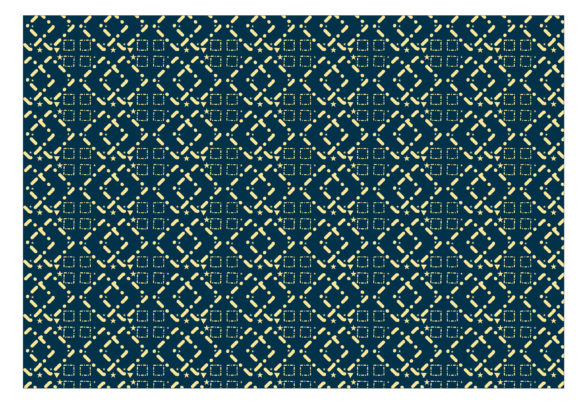
Seamless geometric patterns serve as foundational visual tools across disciplines—bridging aesthetics with function in ways that extend far beyond decorative appeal. Ten Seamless Geometric Patterns Vol. 2 represents a deliberately curated set of abstract vector-based designs engineered for adaptability, precision, and cross-platform compatibility. Unlike generic pattern libraries, this collection prioritizes technical readiness and creative flexibility, making it especially valuable for users who require reliable, editable assets without compromising on resolution or structural integrity.
What Makes These Patterns Technically Robust?
At its core, the strength of Ten Seamless Geometric Patterns Vol. 2 lies in its multi-format delivery and intentional file architecture. Each of the ten unique patterns is supplied in four distinct native formats: EPS v10, Adobe Illustrator v10 (AI), CorelDRAW X7 (CDR), and high-resolution PNG. This breadth ensures compatibility across professional design ecosystems—from print-focused workflows in commercial studios to digital-first environments used by web developers and UI designers.
The EPS and AI files preserve full vector scalability and layer structure, enabling precise adjustments to color, spacing, rotation, or tiling behavior. Designers working with branding guidelines or accessibility requirements can modify stroke weights, replace swatches, or isolate individual motif elements without degradation. The CDR files support users within the Corel ecosystem—particularly relevant for textile designers, packaging professionals, and educators using CorelDRAW in academic settings.
The inclusion of 3000×3000px PNGs—with transparent backgrounds and black-colored motifs—offers immediate utility where vector editing isn’t feasible. These raster files are optimized for quick integration into presentations, mood boards, CMS-based websites, or prototyping tools like Figma or Adobe XD. Their transparency allows effortless overlay on photos, gradients, or layered compositions, while the consistent dimensions simplify responsive scaling in CSS background declarations.
Diverse Applications Across Industries and Roles
The versatility of Ten Seamless Geometric Patterns Vol. 2 becomes evident when examining how different users apply them in real-world contexts—not as static graphics, but as functional components within larger systems.
- Graphic Designers & Brand Strategists: Use the patterns as subtle background textures beneath typography in editorial layouts or as repeatable surface treatments for branded merchandise. A low-contrast triangular lattice, for example, adds depth to a business card without competing with logo hierarchy.
- Web Developers & UI/UX Practitioners: Implement the PNGs as CSS
background-imagevalues withbackground-repeat: repeat;. Because each tile aligns perfectly at edges, no visible seams appear—even across variable screen widths. Designers report improved performance over large JPG backgrounds due to smaller file sizes and efficient browser rendering. - Textile & Surface Designers: Import the vector files directly into plotters or digital loom software. The precise anchor points and clean Bezier curves ensure accurate reproduction on woven fabrics, ceramic decals, or laser-cut acrylic panels. One educator noted using the hexagonal grid variant to teach tessellation principles in middle-school math classes—projecting the AI file onto interactive whiteboards to demonstrate rotational symmetry.
- Educators & Researchers: Leverage the patterns as visual scaffolds for data visualization—overlaying heatmaps or statistical overlays onto neutral geometric fields. In cognitive science studies, researchers have employed variations with controlled contrast ratios to assess perceptual load during interface testing.
- Hobbyists & Small-Business Owners: Apply the patterns to DIY projects such as custom wrapping paper, resin-coated coasters, or stenciled wall murals. The seamless nature eliminates alignment frustration during manual tiling—a common pain point when adapting non-repeating assets for physical surfaces.
Design Characteristics That Support Intentional Use
Each pattern in Ten Seamless Geometric Patterns Vol. 2 reflects deliberate compositional choices rather than algorithmic repetition alone. Observations from user testing reveal several recurring traits that contribute to their practicality:
- Balanced Visual Weight: Motifs avoid excessive density or optical vibration. Even intricate interlocking shapes maintain breathing room, preventing fatigue during extended viewing—critical for interfaces or learning materials.
- Neutral Color Foundation: While delivered in black on transparent backgrounds, the underlying geometry avoids chromatic bias. This neutrality makes recoloring predictable in both RGB and CMYK workflows, reducing trial-and-error during brand adaptation.
- Scalable Rhythm: Repetition intervals vary intentionally—some patterns repeat every 2 inches digitally, others every 6. This range supports both micro-applications (e.g., icon fills) and macro-uses (e.g., architectural wall cladding mockups).
- Edge Integrity: Every pattern undergoes manual edge-checking to eliminate stray anchor points or misaligned paths. This attention prevents “ghost lines” or unexpected gaps during export—especially noticeable in large-format printing or SVG embedding.
Workflow Considerations and Realistic Implementation Tips
Integrating these patterns effectively depends less on technical capability and more on contextual awareness. For instance, using a high-frequency diamond grid as a full-page web background may hinder readability if paired with light gray text—yet the same pattern works exceptionally well as a subtle border treatment around callout boxes.
When preparing for print, designers should verify color profiles before finalizing swatches. Although the vector files contain no embedded color management, assigning the correct ICC profile (e.g., ISO Coated v2 for offset) ensures fidelity between screen and press output. Similarly, web users benefit from compressing the provided PNGs via modern tools like Squoosh or ImageOptim—reducing file size up to 40% without perceptible quality loss.
For educators introducing pattern design concepts, the set serves as an accessible entry point into discussions about modularity, cultural symbolism in geometry, and computational thinking. One university instructor built a semester-long module around reverse-engineering the tiling logic of three patterns—asking students to recreate them from scratch using only basic shape tools and transform functions.
Why Format Diversity Matters Beyond Convenience
The decision to supply Ten Seamless Geometric Patterns Vol. 2 in EPS, AI, CDR, and PNG isn’t merely about broadening audience reach—it addresses real workflow fragmentation. A marketing agency might use Illustrator files for client-facing brand decks, while their production partner relies on CorelDRAW for die-cut template generation. Meanwhile, freelance developers integrating patterns into WordPress themes often lack access to vector editors entirely; the PNGs let them proceed without dependency on third-party conversion services.
This format redundancy also future-proofs usage. As software versions evolve—or legacy systems persist—the availability of multiple native formats reduces risk of obsolescence. A designer maintaining a decade-old CorelDRAW X7 installation can still leverage the full set without upgrading hardware or licensing new subscriptions.
Observations From Cross-Disciplinary Adoption
Feedback collected from varied users highlights nuanced advantages not always apparent from spec sheets. A textile researcher noted that the vector precision allowed her to simulate fabric drape simulations in Clo3D by importing paths as seam guides. A museum exhibit designer repurposed one angular pattern as a tactile floor graphic—cutting vinyl with CNC routers using the EPS outlines, achieving sub-millimeter accuracy across 12-meter installations.
Small-business owners report time savings in product photography: placing items atop printed pattern swatches creates cohesive, branded backdrops without needing studio lighting setups. One candle maker described how switching from stock photo backgrounds to custom-printed geometric cloths increased perceived product premiumness in online listings—leading to measurable uplift in average order value.
Final Considerations for Thoughtful Integration
While Ten Seamless Geometric Patterns Vol. 2 offers significant utility, its effectiveness hinges on alignment with project goals—not just technical fit. Before selecting a pattern, consider the emotional resonance of its geometry: angular forms may convey precision and innovation, while organic curves suggest approachability and flow. Test contrast ratios against intended foreground content using WCAG-compliant tools, especially when deploying patterns behind text or interactive elements.
Also recognize that seamless doesn’t mean invisible. Even subtle repetition influences perception—sometimes reinforcing rhythm and structure, other times introducing unintended visual noise. When in doubt, step away from the screen for 30 seconds and return with fresh eyes; what appears harmonious at 100% zoom may feel overwhelming at actual viewing distance.
Ultimately, this collection succeeds not because it contains “more” patterns, but because each one behaves predictably across contexts, adapts gracefully to constraints, and invites thoughtful interpretation—whether applied to a classroom worksheet, a luxury packaging prototype, or a civic information dashboard. Its value emerges not in isolation, but through sustained, context-aware use.