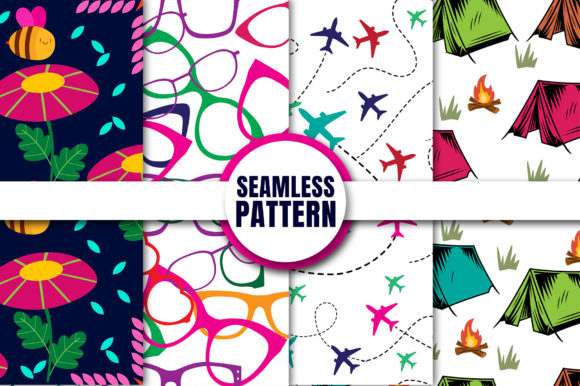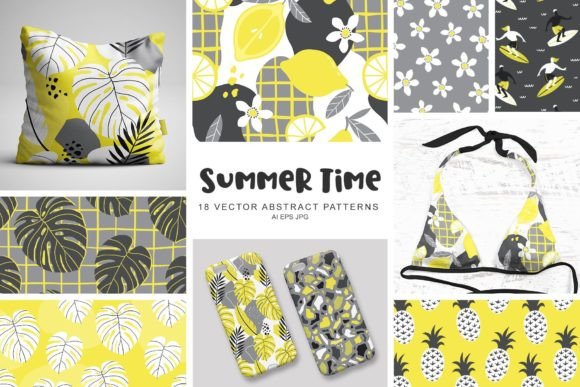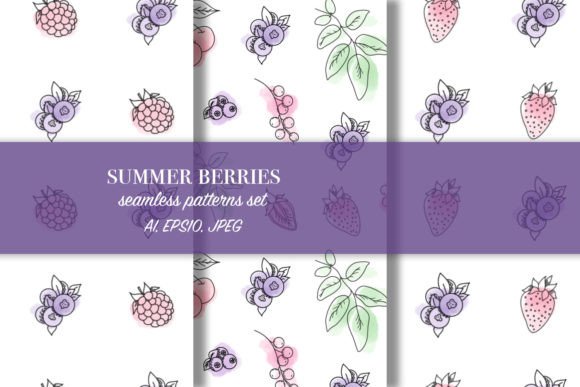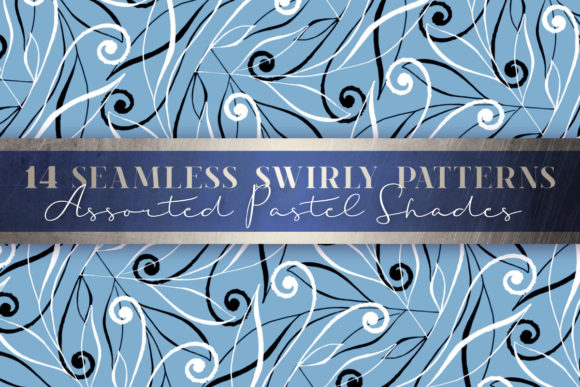
Summer Patterns for Travel and Picnic
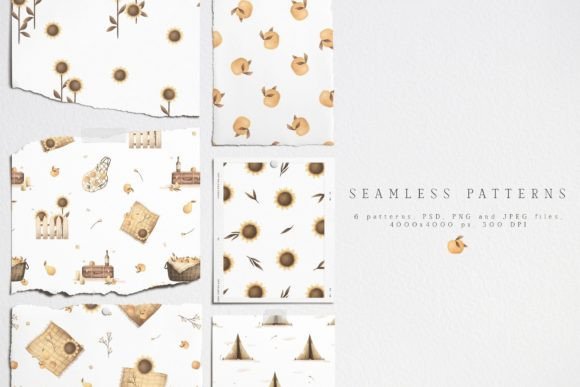
Summer Patterns for Travel and Picnic is a curated collection of six seamless, high-resolution raster patterns designed for creative projects centered around seasonal outdoor themes. Each pattern supports travel, picnic, vacation, country life, and camping motifs—featuring cohesive visual language, consistent color palettes, and thematic cohesion. The set includes PNG, PSD, and JPEG files at 4000 × 4000 pixels, all rendered at 300 DPI. PNG files include transparent backgrounds; PSD files retain layer structure for editing; JPEGs offer broad compatibility for print or web use.
Who Might Consider This Collection?
This collection appeals to designers, crafters, small business owners, and educators who need versatile, ready-to-use assets for themed projects. Common use cases include designing reusable shopping bags, fabric prints for picnic blankets or tote bags, digital invitations for summer events, stationery sets, social media templates, or packaging for artisanal food products. It’s especially relevant when visual consistency across multiple items matters—such as branding a pop-up market stall or launching a seasonal product line tied to outdoor leisure.
Key Benefits
First, the resolution and file format variety support both digital and physical output. At 4000 × 4000 px and 300 DPI, the patterns scale well for large-format printing—like banners or fabric yardage—without visible pixelation. The transparent-background PNGs integrate cleanly into layered designs, eliminating the need for manual masking. Second, the seamless nature means patterns tile predictably, reducing time spent adjusting repeats in design software. Third, the thematic focus—travel, picnic, vacation, country life, camping—ensures visual relevance without requiring extensive customization to match a seasonal or lifestyle context.
Tradeoffs and Limitations
Because all illustrations are raster-based, these patterns cannot be infinitely scaled without loss of fidelity. Vector alternatives would allow crisp enlargement beyond 4000 px, but raster files remain appropriate for most standard print and screen applications. Additionally, while the six patterns share stylistic harmony, they do not include variations in colorways or motif density—so users needing alternate hues or simplified versions must adjust them manually in editing software. The PSD files provide editable layers, but only if the user has access to Adobe Photoshop or compatible tools. Users relying solely on free or open-source editors may find JPEG or PNG files more immediately usable, albeit less flexible.
Practical Considerations Before Use
Assess your intended output medium first. For fabric printing, confirm with your vendor whether transparent-background PNGs are accepted—or if a white background (JPEG) is preferred. For web use, consider file size: 4000 × 4000 px raster files can exceed 10 MB each, potentially affecting page load speed. Optimizing for web (e.g., resizing or converting to WebP) may be necessary. Also verify licensing terms—while the description notes file formats and resolution, it does not specify usage rights. Commercial application, especially in client work or mass-produced goods, requires clarity on redistribution permissions.
When This Collection Is a Strong Fit
Summer Patterns for Travel and Picnic is well-suited when you need reliable, cohesive, and production-ready assets on a timeline. If you’re developing a limited-run product—such as a set of summer-themed greeting cards, a small-batch line of reusable lunch wraps, or branded materials for a local farm-to-table event—this collection offers efficiency without sacrificing quality. Its focused theme reduces decision fatigue compared to browsing generic pattern libraries. Designers working within tight brand guidelines that emphasize warmth, simplicity, and outdoor authenticity will find the motifs immediately applicable. Likewise, educators creating classroom resources about seasons or community life may use the patterns to reinforce thematic units visually—without needing illustration skills.
When Alternatives May Be Worth Exploring
If your project demands adaptability across multiple color systems—such as CMYK for offset printing and Pantone for spot-color branding—you may need patterns supplied with documented color profiles or vector equivalents for precise reproduction. Similarly, if your workflow relies heavily on generative tools or AI-assisted design, raster-only assets limit real-time manipulation options like dynamic recoloring or parametric scaling. In those cases, SVG-based pattern libraries or custom illustration services may offer greater long-term flexibility. Also, if your audience spans diverse cultural contexts, consider whether the depicted scenes—e.g., specific picnic setups, camping gear, or rural landscapes—resonate universally or reflect narrow regional assumptions. Broader collections with global seasonal references could better serve international markets.
Making a Practical Decision
Begin by listing your core requirements: required output size, file format dependencies, editing environment, and intended distribution channel. If you primarily use Photoshop, value transparency, and need print-ready resolution for short-run physical goods, this collection meets those needs directly. If you prioritize scalability, cross-platform compatibility, or accessibility for non-Adobe users, weigh the effort involved in converting or adapting the files against the time saved by starting with a themed set. Compare sample previews—not just for aesthetic appeal but for repeat behavior: zoom in to check for visible seams or inconsistent spacing between elements. Finally, consider how much time you’re willing to invest in customization. A tightly themed set saves time up front but may require more effort later if your needs evolve beyond its scope.
Final Thoughts
Summer Patterns for Travel and Picnic serves a specific niche effectively: creators seeking efficient, high-fidelity, and thematically unified raster patterns for warm-weather outdoor concepts. Its strength lies in execution—not novelty—and its utility depends on alignment with your technical constraints and creative goals. It is neither a universal solution nor a replacement for custom illustration, but rather a practical resource for targeted applications where consistency, resolution, and theme matter more than infinite adaptability. Evaluating it alongside your actual workflow—not idealized scenarios—will yield the clearest sense of fit.