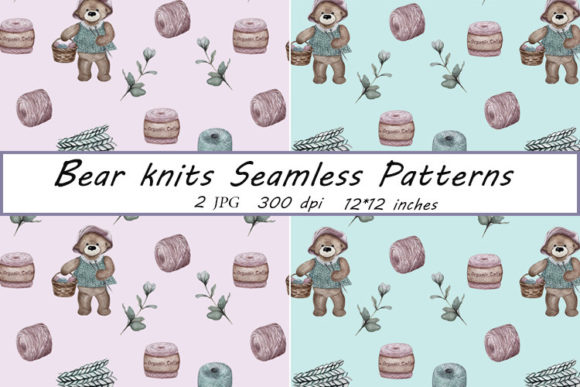
Bear in Knitted Dress Seamless Patterns
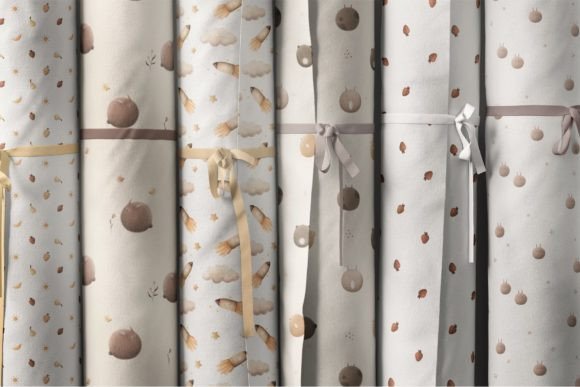
A warm, hand-drawn bear in a cozy knitted dress—soft watercolor textures, gentle outlines, and thoughtful details—forms the heart of this seamless pattern. It’s not just charming; it’s built for real-world use. Each element repeats invisibly across the canvas, so whether you’re printing on fabric, designing a photo album cover, or creating a set of Mother’s Day postcards, the design flows without breaks, seams, or awkward edges.
The pattern is composed entirely from original watercolor illustrations—painted by hand, then digitally refined to preserve organic texture while ensuring crisp scalability. That authenticity matters: it gives your projects a tactile, heartfelt quality that mass-produced vectors often lack. At 300 dpi and 3600 × 3600 pixels (12 × 12 inches), it delivers sharp detail for both digital screens and high-resolution print outputs—no pixelation, no compromises.
Why This Pattern Works Across So Many Projects
Seamless patterns succeed when they balance visual appeal with functional flexibility—and this one does both. The bear motif is sweet but not saccharine; the knitting theme adds crafty warmth without leaning into cliché. Because the repeat unit is carefully balanced—not too dense, not too sparse—it adapts gracefully to different scales and surfaces.
Unlike static illustrations, a seamless pattern multiplies its utility. You’re not limited to one bear on one card. You can tile it across a tote bag, wrap it around a ceramic mug, layer it softly as a background in a digital planner, or scale it down for delicate sticker sheets. Its versatility comes from intentionality in design—not randomness.
Creative Uses That Deliver Real Value
Here’s where practicality meets inspiration:
- Mother’s Day gifts with personality: Print the pattern onto cotton tea towels, stitch it onto a linen pillowcase, or use it as a foil-stamped background on handmade greeting cards. Because the theme nods to knitting—a craft often associated with care and time-giving—it resonates emotionally without needing words.
- Scrapbooking and photo albums: Use it as a subtle border, a full-page background, or a textured overlay behind printed photos. Its soft watercolor base ensures text remains legible when layered with light type or captions.
- Small-batch product design: Entrepreneurs and makers can apply it to ceramic mugs, enamel pins (using simplified line-art versions), or even reusable shopping bags. The 300 dpi resolution holds up well during screen printing and sublimation transfers.
- Digital tools and templates: Designers integrate it into Canva templates, Notion dashboard headers, or printable habit trackers. Its warmth makes productivity tools feel more human—especially useful for educators building classroom resources or coaches crafting client workbooks.
How Different Creators Can Adapt It Thoughtfully
Hobbyists and crafters might start simple: print a sheet of stickers to label yarn bundles or gift tags for handmade scarves. No design software needed—just crop and print. For those comfortable with layers, try adjusting saturation or adding a faint grid overlay to guide embroidery placement.
Small business owners can use the pattern as part of a cohesive brand refresh—especially if their products center on handmade goods, wellness, or family-focused experiences. Pair it with a clean sans-serif font and muted palette to keep messaging clear and premium-feeling. Consistency matters: using the same seamless background across packaging, social posts, and email headers builds recognition faster than changing visuals each time.
Educators and bloggers can embed it into printable lesson plans (e.g., “knitting-themed” math word problems or storytelling prompts) or use cropped sections as decorative dividers in blog posts about creativity, mindfulness, or seasonal traditions. Its gentle aesthetic supports focus—not distraction.
Freelance designers benefit most from its technical readiness: RGB and CMYK-safe color values, embedded ICC profile, and non-destructive layer structure (if delivered with source files). That means less time prepping, more time customizing for client needs—like recoloring the bear’s dress to match a brand’s secondary palette or isolating individual motifs for icon sets.
Keeping Your Results Clear, Cohesive, and Audience-Friendly
Even beautiful assets fall flat without smart application. A few grounded principles help:
- Respect contrast and legibility. If adding text over the pattern, use a semi-opaque white or black overlay (15–25% opacity) or place type in negative space—like the open area between bears—rather than forcing it through busy areas.
- Scale intentionally. On apparel, a larger repeat (e.g., 6-inch tiles) reads as bold and graphic; on stationery, reduce the scale so the motif feels delicate, not overwhelming. Most design apps let you adjust repeat size non-destructively.
- Stay true to context. A playful knitting bear fits naturally on baby shower invites or craft fair signage—but may feel off-brand for a law firm’s holiday card. Ask: *Does this support the message—or distract from it?*
- Test before finalizing. Print a 4×4 inch swatch to check color accuracy, especially on fabric or ceramics. Watercolor tones can shift subtly depending on substrate and ink type.
Final Thought: Tools Should Serve Your Vision, Not Define It
Bear in Knitted Dress Seamless Patterns isn’t about chasing trends. It’s about having a reliable, expressive tool—one rooted in handmade authenticity and engineered for real use. Whether you’re mailing five postcards or launching a line of knit kits, it offers consistency without rigidity, charm without clutter, and flexibility without friction.
You don’t need to overhaul your process to use it well. Start small: try it once on a project where warmth and care are central. See how it changes the tone—not just of the object, but of the feeling it carries. That’s where thoughtful design begins.